Driver Theory
Study Modules
Learn the essential driving knowledge you need to pass the DVLA theory test with confidence.

Study the Key Topics for Your DVLA Theory Test
Choose a module or top to start learning
Ghana DVLA Driving Test Study Guide
Master the official DVLA driver theory syllabus with structured modules, traffic regulations, road signs, and safe driving practices.
Study Modules
DVLA Exam Guide
Essential guide to passing the Ghana DVLA theory test
 1.1
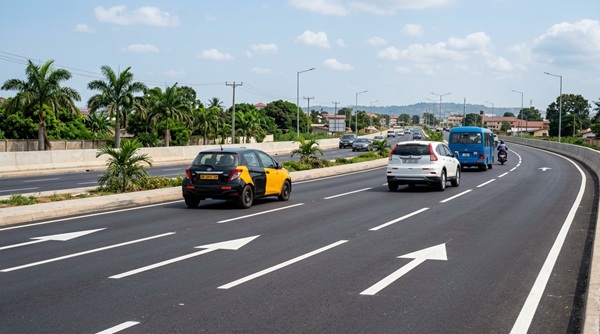
Ghana DVLA Theory Test: What to Expect
Understand the test format, computer-based exam layout, pass mark, and question structures.
 1.2
Learner’s Licence & Licensing Process
Step-by-step guide to acquiring your learner’s permit and progressing to a full licence.
 1.3
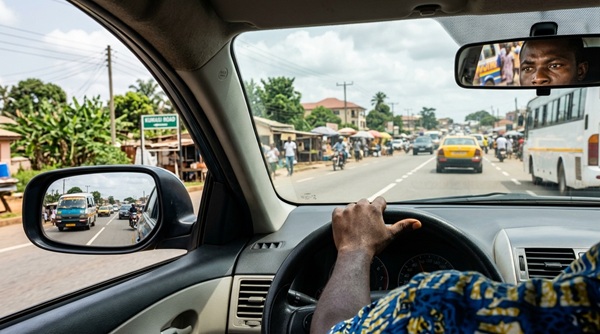
How to Prepare for the DVLA Test
Proven study strategies, practice test tips, and revision methods for guaranteed success.
 1.4
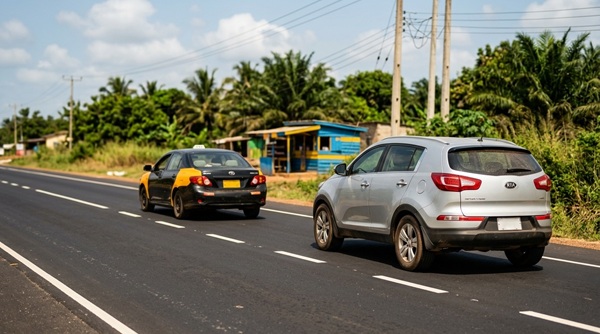
Common Mistakes to Avoid
Learn the most frequent errors made during the DVLA exam and how to avoid failing.
Road Signs
Master all categories, shapes, and meanings of Ghanaian road signs
 2.1
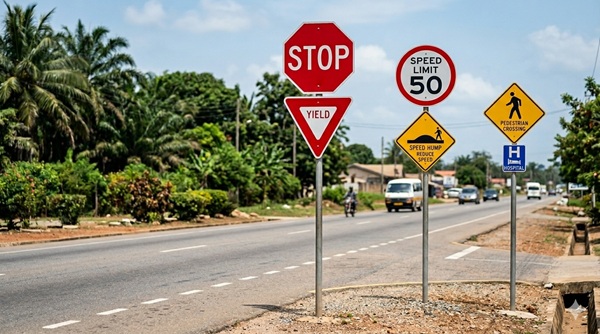
Warning Signs
Identify triangular warning signs alerting you to hazards, sharp bends, and road conditions ahead.
 2.2
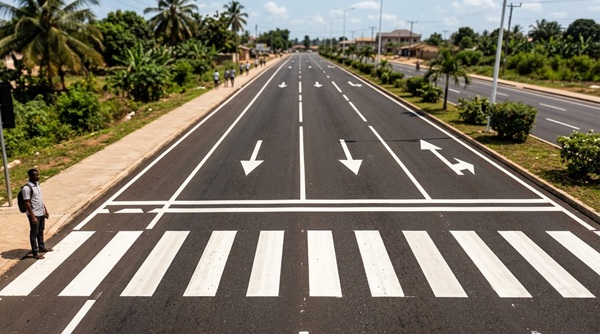
Mandatory Signs
Understand circular blue signs that give mandatory instructions drivers must follow.
 2.3
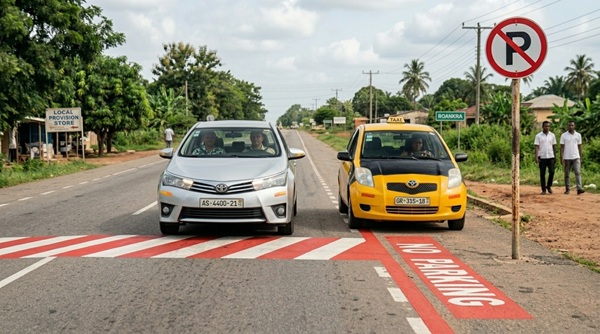
Prohibitory Signs
Learn red-bordered circular signs that indicate actions strictly forbidden on the road.
 2.4
Informatory Signs
Rectangular guide signs providing direction, distances, services, and route information.
 2.5
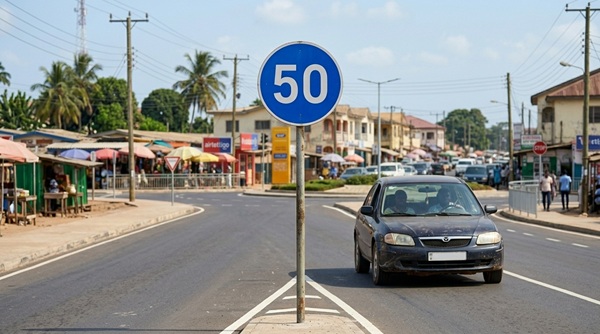
Road Sign Shapes & Colours
Decoding the standard color codes and shape geometry used across international road signs.
2.6
How to Identify Road Signs Quickly
Tips and memory tricks to instantly recognize signs during real-world driving and exams.
Traffic Signals & Road Markings
Understand traffic light sequences, police signals, and pavement markings
 3.1
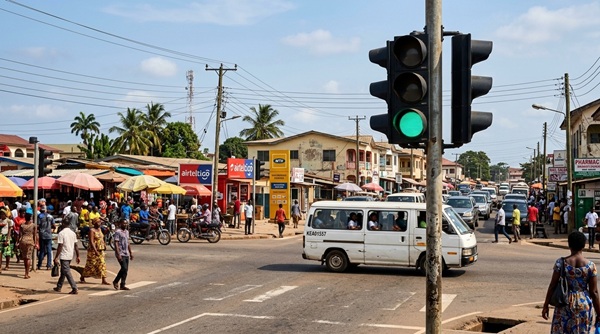
Traffic Lights
Understand standard red-amber-green traffic light phases and specialized arrow signals.
 3.2
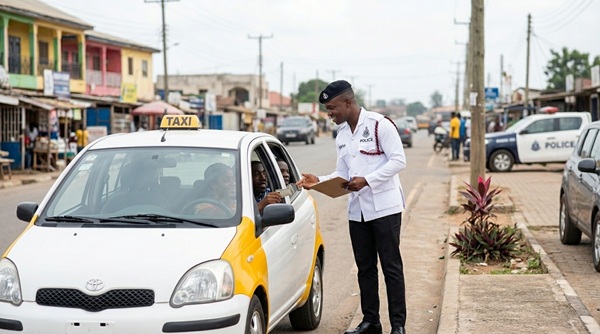
Police Hand Signals
Recognize manual traffic control gestures used by MTTD officers at intersections.
3.3
Road Markings
Solid lines, broken lines, yellow boxes, zebra crossings, and directional arrows decoded.
 3.4
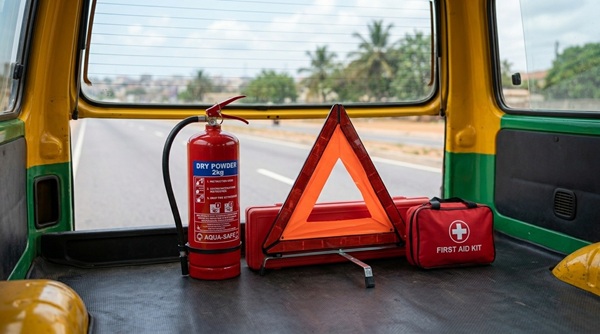
Vehicle Lights & Indicators
Proper use of headlights, high beams, indicators, hazard lights, and brake lights.
Rules of the Road
Core regulations for lane position, right of way, and manoeuvres
4.1
Driving on the Right
Understanding Ghana’s right-hand traffic system and keeping to proper lane discipline.
 4.2
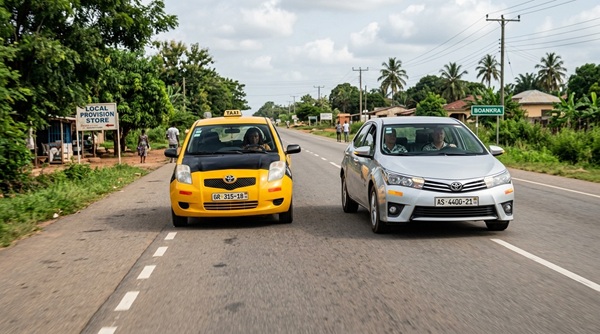
Overtaking
Safe overtaking procedures, mirror checks, blind spots, and where overtaking is illegal.
 4.3
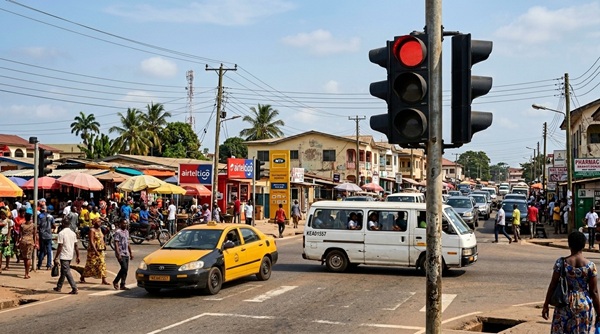
Right of Way
Priority rules at unmanaged crossings, major vs. minor roads, and giving way to emergency vehicles.
 4.4
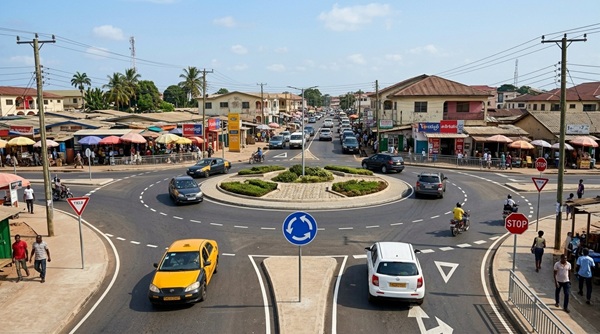
Intersections & Junctions
Navigating crossroad intersections, T-junctions, and box junctions without causing gridlock.
4.5
Roundabouts
Lane selection, signaling, yielding to traffic from the left, and taking correct exits.
4.6
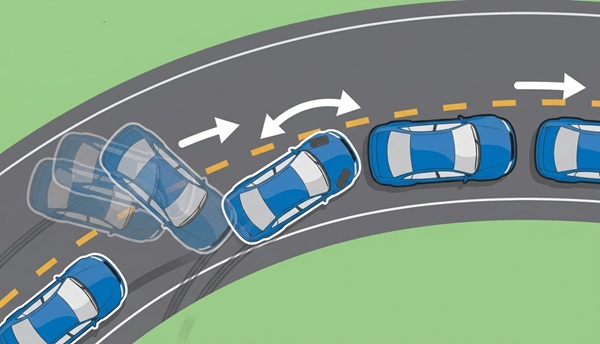
Turning & U-Turns
Correct execution of left/right turns, positioning, and safe U-turn rules.
 4.7
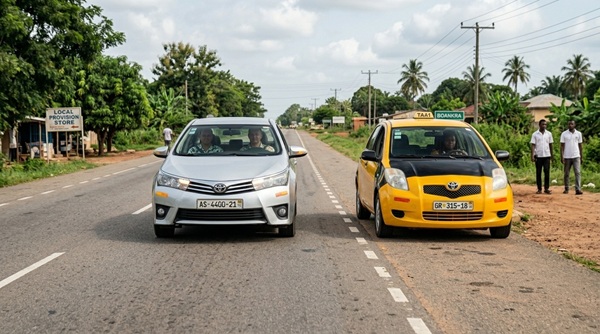
Reversing & Manoeuvring
Safe reversing techniques, 3-point turns, and maneuvering in tight spaces.
 4.8
Speed, Stopping & Parking
Speed limits for urban/highway roads, legal parking zones, and no-stopping areas.
Defensive Driving
Anticipate hazards, maintain safe distances, and handle adverse conditions
5.1
Hazard Awareness
Identifying potential hazards early, scanning techniques, and risk perception.
 5.2
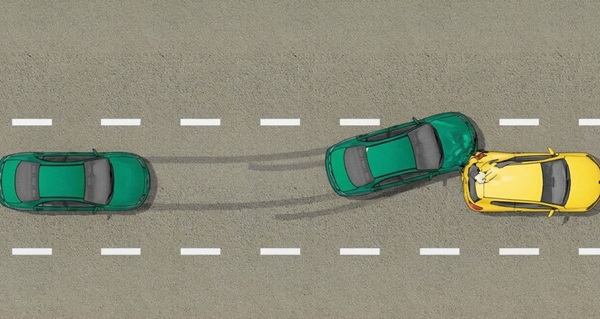
Following Distance
Applying the 2-second rule and adjusting safety cushions behind lead vehicles.
5.3
Stopping Distance
Thinking distance vs. braking distance, and factors influencing total stopping time.
 5.4
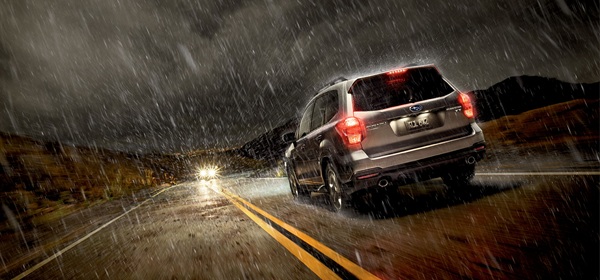
Night Driving
Managing glare, reduced visibility, fatigued drivers, and unlit roads at night.
5.5
Rain & Poor Weather
Handling aquaplaning, heavy downpours, slippery road surfaces, and reduced vision.
5.6
Safe Driving Practices
Developing defensive habits, avoiding road rage, and eco-friendly driving routines.
Vehicle Knowledge & Safety
Maintenance, dashboard indicators, emergency responses, and accident procedures
6.1
Basic Vehicle Checks
Daily pre-drive inspections: oil levels, coolant, windshield fluid, and brake fluid.
6.2
Tyres, Brakes & Lights
Checking tyre pressure and tread depth, testing brakes, and inspecting lighting systems.
6.3
Mirrors & Visibility
Adjusting rearview and side mirrors to eliminate blind spots and ensure maximum clear view.
6.4
Vehicle Warning Signs
Understanding dashboard warning lights (engine, ABS, oil, battery, temperature).
 6.5
Breakdowns & Emergencies
What to do if your car breaks down, placing advance warning triangles, and staying safe.
6.6
Accidents & What to Do
Step-by-step emergency action during an accident, rendering aid, and reporting to police.
Ghana Traffic Laws & Licensing
Legal driver obligations, licence categories, required documents, and penalties
 7.1
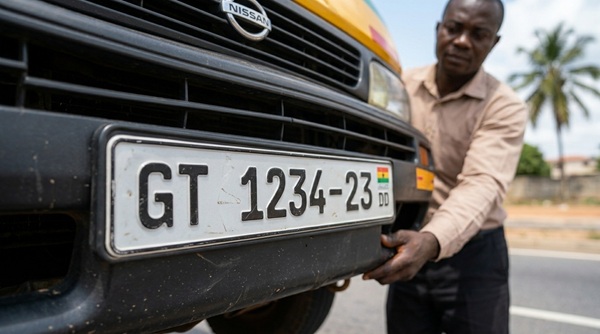
Driving Licence Classes
Understand categories A, B, C, D, E, and F licence classifications under Ghanaian law.
 7.2
Learner’s Licence
Restrictions, ‘L’ plate display rules, and instructor supervision requirements for learners.
7.3
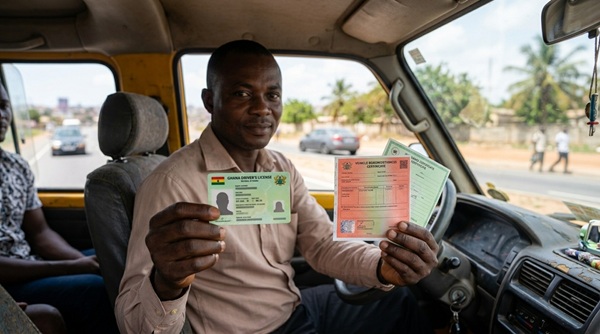
Required Documents
Mandatory documents required while driving: licence, roadworthiness certificate, insurance.
7.4
Seat Belts & Child Safety
Mandatory seat belt laws for front/rear passengers and child restraint regulations.
7.5
Mobile Phones & Distracted Driving
Legal prohibitions against hand-held mobile phone use while operating a vehicle.
 7.6
Alcohol & Driving
Legal blood alcohol concentration (BAC) limits, breathalyzer tests, and drink-driving penalties.
 7.7
Traffic Offences & Penalties
Overview of major traffic infractions, court prosecution, fines, and licence suspensions.
Have Any Questions?
Lorem ipsum dolor sit amet, consectetur adipiscing elit. Hendrerit massa condimentum enim, nisl vitae. Ultricies aliquet proin egestas donec viverra turpis luctus gravida ipsum.